
TRI® matrix®
The abutment-free workflow.
matrix® is the world’s first dental implant system designed for restorations produced directly from a 3D printer or milling machine, without an abutment: zirconia directly on titanium, made for chairside digital workflows.
Does it break?
The question every dentist asks. Six minutes on how the connection works, what the science says, and the questions you get asked.
Chapters
Presented by Sandro Venanzoni, CTO, TRI®. Click a chapter to jump.
At a glance
6 years of clinical data. More than 1 billion chewing cycles simulated.
How the connection works
A totally different way — mechanically.
Designed from scratch to support zirconia on titanium. Every other implant connection was optimised for titanium on titanium.
Compression, not tension
The 20° PowerBase transfers the load into the zirconia as compressive stress, where zirconia is strongest. The Bolt Screw takes the tensile forces the crown cannot absorb.
Fewer components
No abutment, no extra interface. Conventional: 3 components (implant, abutment, screw). matrix®: 2 (implant and screw). Fewer parts, fewer joints that can loosen or fail.
One big, solid screw
For full arches and bridges, no multi-unit abutment: the matrix® Bolt Screw is torqued at 35 Ncm instead of the small screws that sit on top of multi-units.
Connection & zero bone loss
Apples to apples: the matrix® connection in the soft tissue compared with a conical connection at bone level. (2:03)
Placement depth
Biological width, the 2 mm rule below the gingiva, and why you never set the implant too high in thin tissue. (1:18)
Scientific summary · September 2026
Just updated.
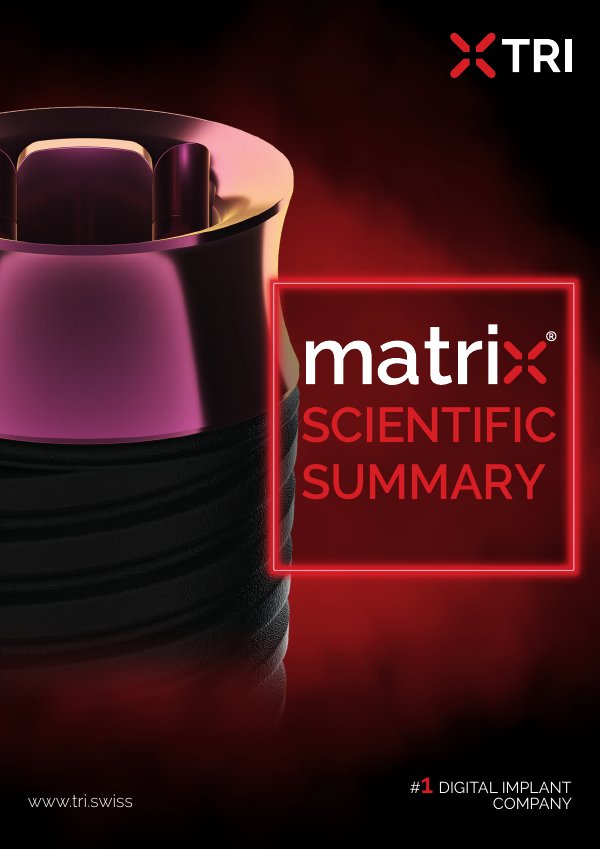
The consolidated overview of the pre-clinical and clinical evidence behind matrix®, with links to every PubMed publication.
 Download the summary
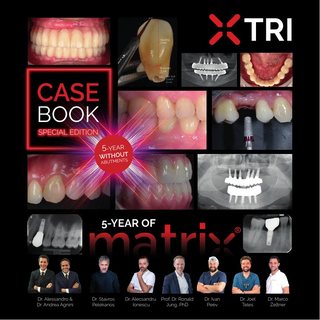 Case book: 5 years without abutment11 clinical cases, single crowns to full archesDownload the case book ↓
Frequently asked
The questions you get asked.
Straight answers to what dentists and labs ask about matrix®. Filter by topic or search. Where the video covers it, jump straight to that moment.
Experts & ambassadors
The people behind the evidence.
Investigators of the clinical and laboratory studies in the Scientific Summary, and the clinicians who share their experience with matrix®. Hover a face, filter by role, click for details.